Lessons from Harper Lee … writing that all important second novel

With Harper Lee’s second novel due to be launched today and generating unprecedented excitement around the world, many writers not blessed with a fan base who have patiently waited 50 years for their next offering are left to bleakly ponder the Herculean task of following up a first novel with another of equal attraction, particularly if the first has been in any way  successful. Having climbed the peak, it is disheartening to realise that the only way is down. Nevertheless, herein lies, perhaps,  the acid test. If a writer is to enjoy a long term career – to make the transition from hobbyist to full-time author – then a second novel is not only a must, but must be good enough to bring along the fans that the first book created.

How does one do this? What is the secret?

I have recently been learning that there are some rules of thumb one can use as a guide. I have just completed the first draft of the second novel in my series about the Baby Ganesh Detective Agency. The first in the series is The Unexpected Inheritance of Inspector Chopra, out in August 2015. The second is entitled The Perplexing Theft of the Jewel in the Crown. As this is a series, my task is made that bit easier. For one, the lead characters are the same. But it is not enough to simply reintroduce them. The characters must grow. Fans expect to learn something new about them in each entry in the series. This is not as easy as it seems, because whatever ‘newness’ you introduce must be consistent with the prior character you have built. For instance, the baby elephant Ganesha now reveals a greater emotional depth, and begins to branch out on his own, an adventure within an adventure. Secondly, there must be new characters, not just because it is a new story, but because the world you created must be fleshed out. No one lives in a goldfish bowl. The tone of the second novel in a series must be consistent – there is nothing more jarring than a series that suddenly seems to be penned by another writer (in some cases it is!)

The plot itself is the key. If the plot of your first novel was the single biggest thing that attracted your audience you have now set the bar frighteningly high. It is unlikely you are going to find another brilliant killer twist, or incredible tale to tell. But you do need to ensure that you find something that stacks up as a solid second effort. This means taking the time to allow that idea to germinate, then flower. Publishers are keen to strike while the iron is hot, ie. while you are hot. But sometimes it pays to allow a quality product to simmer to the boil before unleashing that all-important second offering upon the world.

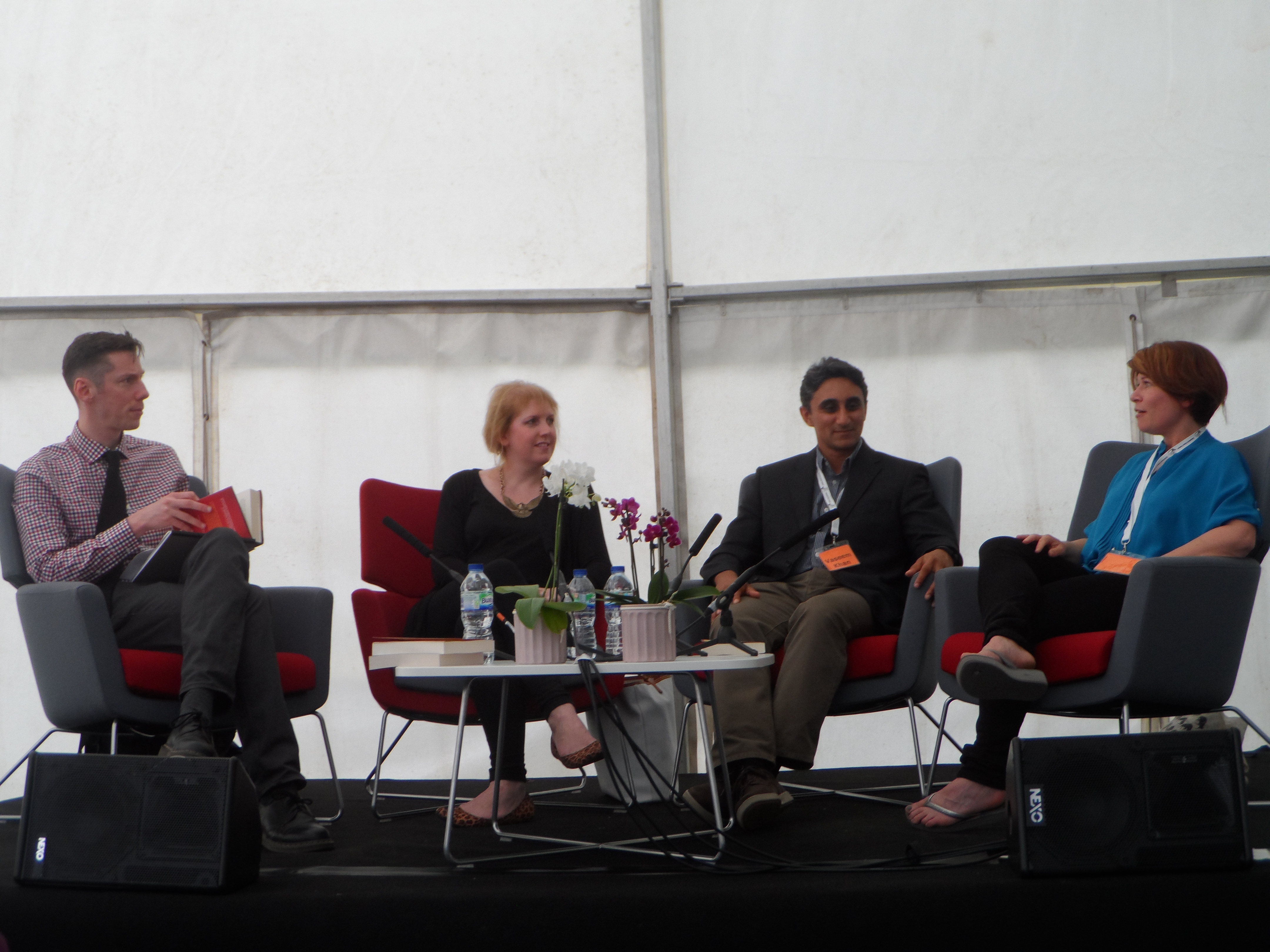
What do writers do at their first literary festival?

For a newly published author a first invitation to speak at a literary festival can be a daunting prospect. After all, if your sole experience of such events has been in the capacity of bibliophile it is quite a dramatic change of mindset to approach it from the other side of the fence. This year I was invited to speak at the Greenwich Book Festival on a panel discussing the inspirations behind crime writing.

Naturally, the first reaction is delight. Am I now important enough to be invited to speak at major literary events? Hurrah! I have arrived. The incipient megalomania, however, is swiftly tempered by a concatenation of realisations that thud into your mind like a barrage of cannon-fire … oh, God, I have to meet my readers!  How can I possibly appear charming, witty, debonair, interesting? What if they despise me? Will I put them off reading future books? Will I come across as a smug self-satisfied narcissist? What if I’m asked a question I haven’t prepared for? How sweaty can one get on stage and still look composed?

Calm down. The good news is that most literary festivals are very well organised and most people in the world of books, particularly readers,  are wonderful and sympathetic. Greenwich University was a beautiful location for such an event, on the banks of a Thames dappled by May sunlight.  The organisers had thoughtfully set up a room so that I could meet my fellow panellists and the chair, a very jovial Dr Michael Fiddler, in advance to plot strategy. When the curtain rose I felt relaxed and at ease. To use a cricketing metaphor the chair deftly bowled half-trackers at me which I proceeded to hit out of the park. When the floor was opened to questions the audience was gentle, and kind. My fellow panellists – one of them bestselling author Clare Mackintosh, the other talented writer Paula Lichtarowicz – were wonderful.

So … my advice? Embrace any such opportunity that comes your way. For writing is a lonely business at the best of times, and literary festivals are the great gathering places of like-minded souls. What is there to be afraid of?

2012-07-24 04.55.53

The joys and woes of the independent bookseller

I recently went on a tour of bookshops in the company of ace Hachette sales managers Bob Mackenzie and Ian Williamson. As well as meeting the lovely folk from the ‘big’ names, I was lucky enough to meet a number of independent bookshop owners and managers. The first thing that struck me was the wonderful stories that had brought these people to their calling. For many it was simply serendipity, a chance twist of fate that suddenly provided them with the opportunity to follow a dream. For others it was a linear progression from book lover to bookstore summer job to world-bestriding colossus i.e. owner of their very own book emporium. Of course, the glue that bound all of these wonderful people together – and bound them to the authors whose works fill their shops – is the love of literature. Book selling in the world of the independent is truly a calling. Margins are wafter thin, hours are often long, sales are rarely predictable. And yet, as I talked to store managers and owners about my book, literature, their cats, kids and the arcane arts of book selling, I realised that there was something else that these individuals had in common … they were happy! They were happy because when they awoke each morning it was to the knowledge that they would spend another day in the company of books or that they might arrive at work to find a proof sent to them of a book that they will instantly love. One incident stays with me. At the Primrose Hill Bookshop I was astounded to see a panicked customer charging in, in dire need of a birthday gift for a loved one. ‘Leave it to me’, the store owner said authoritatively. ‘I know her tastes.’ Needless to say a recommendation was swiftly forthcoming invoking a great sigh of relief from our customer. It is this bond between seller and customer that leads to me believe that whatever the soothsayers and doom-mongers predict, the little bookshop around the corner will be around for a good while yet.

Below are some pictures of my day trolling around Foyles, Waterstones, Blackwell’s, Hatchard’sWaterstones OxfordWaterstones Reading-Oracle, Waterstones Reading,  Blackwell’s OxfordThe Riverside BookshopPrimrose Hill Bookshop,  Belgravia BooksThe Wallingford Bookshop, and The Bell Bookshop in Henley-on-Thames

Homespun wisdom for the aspiring writer

For a debut author getting published in today’s fast-changing and challenging publishing environment is harder than the proverbial camel (or camel 2indeed baby elephant) squeezing through the eye of a needle. For me it has taken almost a quarter of a century. The best advice I can give any young writer is to write, write and then, when you’re absolutely sick of it, write some more. The globally bestselling literary author John Irving reveals that a defining moment for him came when another novelist pointed out that ‘anything else you do is going to be vaguely unsatisfying.’ Thus the first thing any writer needs to do is make the mental adjustment from saying I’d like to be a writer to saying I am a writer. The real question you should ask is ‘am I good enough?’. In other words:  is my writing of a sufficient standard to put together a well written novel in the genre I want to write in? To answer this you need to be brutally honest with yourselves. Most of us are not.. I wrote my first novel aged 17. I thought it would be a runaway bestseller … it wasn’t. I wrote for 23 years before an agent accepted me. I had a great career in the real world in the meantime, which made it difficult to find time to write but I kept at it, never wavering from my end goal of getting published. I estimate I wrote well over a million words during that period – and completed half-a-dozen novels, garnering more rejection letters than I care to mention. Looking back at my early work I can see how I have become a vastly better writer in terms of the actual quality of the writing but also in terms of pace, plot and characterisation. Unless you are one of the lucky ones who hit instant success your road as a writer will be similar. Never give up.