I begin with a David Bowie reference, but the topic of this memo is deadly serious. Last week I was invited to a behind-closed-doors symposium examining the future of mind control techniques. Here at Q branch we are, of course, familiar with this nefarious brand of pseudo-science. It has always been the goal of military and intelligence agencies to exert influence over our enemies, by fair means or foul. Back in 1951, the CIA’s Office of Scientific Intelligence launched Project Artichoke, aimed at determining whether an individual might be coerced (against their will) into carrying out an act of assassination. [The answer is no, not really, unless they happen to be particularly feeble-minded.]
Project Artichoke was the forerunner to the notorious Project MKUltra, another CIA program aimed at developing brainwashing techniques. A key goal of the program was to enable more effective interrogations either through psychological torture or via the development of a ‘truth serum’. As someone who has routinely been forced to sit on government committees I am, of course, no stranger to psychological torture, and it has often occurred to me that the administering of a truth serum to elected politicians would be greatly appreciated by the British public. Alas, no effective truth drug has ever been developed. Most tend to put their recipients to sleep or scramble their brains to the point that they will willingly confess to assassinating Abraham Lincoln.
The MKUltra program continued for two decades and experimented on many (unwitting) test subjects. Today, it stands roundly – and rightly – condemned for human rights violations. In both Project Artichoke and Project MKUltra, an array of drugs were utilised, from cocaine to heroin to LSD, though history remains unclear as to whether the drugs were administered solely to the test subjects or also taken by those in charge of the program. One suspects the latter. (As an aside: the entire global supply of LSD – created in 1938 in a Swiss lab – was bought out by the CIA in the 1950s.)
Today, several labs are experimenting with neurological approaches, namely, direct brain-to-computer interfaces. I must confess, the idea of inserting a chip into the brains of some of our Double Os and remotely directing their actions during field ops does carry a certain appeal. The ability to stop 007 from ramming our latest modified supercar into the side of an express train might go some way to reining in our annual budget . . .
Finally, congratulations to KEVIN Q. for correctly ascertaining the answer to the puzzle in my previous memo, and for being fortunate enough to be picked at random from all the correct entries. The answer, of course, was NILEUS, the name of Admiral Nelson’s dog, which, when written backwards, and a space inserted, becomes SUE LIN, last memo’s clue. Below you will find this edition’s puzzle. Good luck!
Sincerely,
Major Boothroyd
Head of Q Branch
P.S. Here is this edition’s puzzle. One ‘winner’ shall be picked at random from all correct entries and will be mentioned in my following memo. MI6 Archives shall rustle up a book to send to you* Pot luck, I’m afraid! Fill in this form to enter . . . This month’s puzzle is as follows:
What was the name of the famous computer in the film that inspired David Bowie’s Space Oddity (the song where Major Tom first appeared)?
*UK entrants only, alas!
NOTE FROM VASEEM KHAN
This ‘memorandum’ is one of a series of 12 that we will be publishing, celebrating the launch of Quantum of Menace, the first mystery featuring Major Boothroyd, Head of Q Branch (aka Q) from the James Bond universe. Pre-orders are very important to a new series, so we would be immensely grateful if you considered pre-ordering the novel. Buy from bookshops big and small and online. Click here for some options.
To keep updated on the progress of Quantum of Menace, and to receive competitions and giveaways with prizes from the Bond-verse, simply register for my newsletter here.
Patriotism. Here in the security services it is taken as given that we stand for something greater than ourselves. Call it a love of King and Country or a set of values that enshrine our democratic ideals. But where does such belief come from? How do we hold on to it as the very concept becomes ever more politically charged?
When I was young, I spent a lot of time in the library. No surprises there. It was here that I first came across a copy of Nelson by Richard Hough. If ever there was a story to instil a sense of patriotism in a young man, it was the heroic tale of our greatest naval officer. Yes, Nelson may have lost a few too many body parts along the way to said greatness, and his eye for the ladies – or one lady, in particular – may have seen him tarred and feathered in today’s age, but Nelson’s famous signal, sent just before the Battle of Trafalgar – namely: England expects that every man will do his duty – fired my imagination and, dare I say, the imagination of countless servicemen and women since.
Nelson lived up to his own expectations. The battle was won, securing Britain’s supremacy over the seas for a century. Nelson perished and ascended to the pantheon.
As most of you know, in my office hangs a reprint of The Death of Nelson by Benjamin West. It has long been taken as gospel that, as he lay dying, Nelson said to his flag captain, Vice-Admiral Thomas Hardy, ‘Kiss me, Hardy.’ Recent evidence suggests otherwise. Nelson’s parting words might actually have been ‘Thank God, I have done my duty.’ Frankly, this sounds far more likely. (I am fairly certain that should I be mortally wounded in action with the Double Os, my last words would not be ‘Kiss me, Bond.’)
At any rate, Nelson’s example inspired me to consider a career in the navy, but the fact that I tend to get nauseous in the bathtub ruled otherwise. (Fun fact: Nelson himself suffered terribly from seasickness.) Instead, I joined the army – the Royal Engineers – and from there MI6 and Q Branch.
More than two decades on, I still draw inspiration from Nelson’s example. He remains my greatest hero.
On another note, it will not have escaped your attention that several grey-suited individuals have taken up residence in the conference room. They represent an unwelcome follow-up to the recent Spending Review of the security services. Once again, we can expect to be given the third degree by the oversight committee’s grim-faced apparatchiks. I can only hope that our paperclip-obsessed guests might be imbued with the same sense of duty that propelled Nelson. England expects.
Finally, congratulations to RICHARD N. for correctly ascertaining the answer to the puzzle in my previous memo, and for being fortunate enough to be picked at random from all the correct entries. The answer, of course, was the NAUTILUS, Captain Nemo’s submarine from Twenty Thousand Leagues Under the Sea. (The last line of the puzzle referred to the name given to Argonauts, an octopus species known as paper nautili). Below you will find this edition’s puzzle. Good luck!
Sincerely,
Major Boothroyd
Head of Q Branch
P.S. Here is this edition’s puzzle. One ‘winner’ shall be picked at random from all correct entries and will be mentioned in my following memo. MI6 Archives shall rustle up a book to send to you* Pot luck, I’m afraid! Fill in this form to enter . . . This month’s puzzle is as follows: To who am I referring below? Clue: the answer relates to Nelson and requires a four-pawed rearranging of these two words:
SUE LIN
*UK entrants only, alas!
NOTE FROM VASEEM KHAN
WOULD YOU LIKE TO PRE-ORDER QUANTUM OF MENACE – OUT ON 23 OCTOBER 2025?
This ‘memorandum’ is one of a series of 12 that we will be publishing, celebrating the launch of Quantum of Menace, the first mystery featuring Major Boothroyd, Head of Q Branch (aka Q) from the James Bond universe. Pre-orders are very important to a new series, so we would be immensely grateful if you considered pre-ordering the novel. Buy from bookshops big and small and online. Click here for some options.
To keep updated on the progress of Quantum of Menace, and to receive competitions and giveaways with prizes from the Bond-verse, simply register for my newsletter here.
It has come to my attention that the coffee machine in the Q Branch kitchen has once again broken down. It beggars belief that a division renowned for its prowess at invention cannot persuade such a simple device to a) remain operational for longer than five minutes and b) dispense a cup of coffee that does not taste of boiled socks. Following my last run-in with the machine’s maintenance personnel, I am no longer permitted to negotiate this situation on our behalf. (Apparently, I have offended their delicate sensibilities.) Moneypenny has taken the matter in hand and, I am assured, will rectify the situation forthwith.
The coffee machine situation reminds me of recent setbacks on our solo-submersible project. As some of you may remember, the idea for this project originated with our field agents (specifically, one agent). At the time, objections were raised (by myself) as to the viability of the project, with some (again, yours truly) comparing it to The Great Panjandrum, a sort of armed, rocket-powered giant Catherine wheel, designed by British engineers during WW2, an invention so inept that it was never actually deployed. The Great Panjandrum, during its initial test, managed to not only utterly fail in its primary objective – rolling along a beach in a straight line – but misfired rockets in all directions, almost taking out several ranks of senior military brass, before crashing and fragmenting into bits in a series of violent explosions.
In spite of this, Q Branch’s objections to the proposed submersible programme were overruled. As M reminded us at the time, it is our duty, as the research and development arm of the British Secret Service, to provide for the needs of our agents. And if 007 says he needs a personal sub armed with a laser-guided warhead, then who are we to argue? (It should be noted that previous attempts at such armed mini-subs have largely been the domain of drug cartels. These so-called ‘narco-subs’, invariably constructed in potting sheds located deep in the South American jungle, are notoriously badly engineered, little more than tin death-traps for their hapless pilots, where paper bags serve as latrines and the primary propulsion device is no more sophisticated than a mouse-wheel.)
To be clear, I am not against the idea of submarines, and we shall plough ahead with fortitude, as ever. But the practical limitations of this particular design should not be underestimated. One can only think of the challenges faced by our predecessors. For instance, Dutch inventor Cornelis Drebbel, credited with the first propulsive submarine – a leather-covered and iron-reinforced rowboat oared by twelve men – built in 1620 under the auspices of King James I – he of Bible fame. This device – imaginatively christened Drebbel I – managed to submerge to a whopping depth of fifteen feet in the Thames. The British navy declined to utilise it.
Finally, congratulations to Matt G. for correctly ascertaining the answer to the puzzle in my previous memo, and for being fortunate enough to be picked at random from all the correct entries. The answer, of course, was Mata Hari. Below you will find this edition’s puzzle. Good luck!
Sincerely,
Major Boothroyd
Head of Q Branch
P.S. Here is this edition’s puzzle. One ‘winner’ shall be picked at random from all correct entries and will be mentioned in my following memo. MI6 Archives shall rustle up a book to send to you* Pot luck, I’m afraid! Fill in this form to enter . . . This month’s puzzle is as follows: To what am I referring below?
A vessel now part of ocean lore.
Captained by a fabled submariner of yore.
An adventure tale to set imaginations aflame.
Marine Argonauts now share this name.
*UK entrants only, alas!
NOTE FROM VASEEM KHAN
This ‘memorandum’ is one of a series of 12 that we will be publishing, celebrating the launch of QUANTUM OF MENACE, the first mystery featuring Major Boothroyd, Head of Q Branch (a.k.a Q) from the James Bond universe. Pre-orders are very important to a new series, so we would be immensely grateful if you considered pre-ordering the novel. Buy from bookshops big and small and online. Click here for some options.
To keep updated on the progress of Quantum of Menace, and to receive competitions and giveaways with prizes from the Bond-verse, simply register for my newsletter here.
The start of a new year. A time for resolutions. Including several dictated to us from on high. It won’t have escaped your notice that the recent Spending Review has left Q Branch leaner, greener, and, decidedly, meaner. It has further been suggested that we “foster a culture where EQ – Emotional Quotient – and not merely IQ – is employed as a metric of success.” I recently discussed this with M.
M’s contention is that agents trained to eliminate – with extreme prejudice – our enemies don’t need to be mollycoddled. His exact words were “Q, I don’t expect our Double Os to sit around holding hands singing “Kumbaya”, before putting a bullet through the likes of Blofeld.”
Nevertheless, this is the ideal moment to re-evaluate our role as the research and development division of the British Secret Service. The fact is that we have long been invaluable to our nation’s intelligence apparatus. On a recent trip to the archives, the idea of a Q Branch museum was mooted. Splendid notion.
Looking back, I am astounded by the inventiveness of our predecessors.
Take, for instance, the ‘pigeon camera’, a device designed to be strapped to Lord Nelson’s least favourite bird. In between dodging bombs and bullets, these adventurous pigeon pilots took thousands of critical reconnaissance photos during WW1. So effective were they that several went on to the status of war hero. I note here one such medallist: Cher Ami – “dear friend” to the linguistically challenged – awarded the Croix de Guerre by the French government. His stuffed remains may now be found in the Smithsonian Institute.
From the sublime to the ridiculous.
Back in the 1970s, our old friends across the pond, the CIA, developed what would become known as the T1151 “Dog Doo” transmitter. Deployed during the Vietnam War, this homing beacon was used to track supply movements along the Ho Chi Minh trail. The beacon was camouflaged to resemble a medium-sized faecal dropping. How’s that for lateral thinking?
This memo constitutes the first of a monthly series. My own attempt to get a little more “touchy-feely”, in line with HQ’s diktat. To this end, I shall set a puzzle in each memo, a means of promoting a little Q Branch esprit de corps. See postscript below for this month’s brain teaser.
Finally, I need not remind everyone that our mission here at Q Branch remains to develop the tech that keeps our field agents safe and operational. As ever, we work behind the scenes. Not for us the power and the glory. Nevertheless, we may take great pride in what we do. So, whatever your new year’s resolution, be it to learn to play “Ode to Joy” on the kazoo or to run the London Marathon in a Godzilla suit, I wish more power to your elbow, and a productive new year.
Sincerely,
Major Boothroyd
Head of Q Branch
P.S. Here is your first puzzle.One “winner” shall be picked at random from all correct entries and will be mentioned in my following memo. Perhaps MI6 Archives might even stretch to rustling up a book to send you?* Pot luck, I’m afraid! Fill in this form to enter . . . This month’s puzzle is as follows: To whom am I referring below?
A headless corpse, this spy leaves behind.
And disputed legacy, now out of mind.
Enchantress once of men of state.
A byword now for quisling’s fate.
P.P.S. In light of the recent mishap with 007’s Bentley, no further vehicles are to be authorised to Double O agents without my express approval.
*UK entrants only, I’m afraid!
NOTE FROM VASEEM KHAN
This ‘memorandum’ is one of a series of 12 that we will be publishing, celebrating the launch of QUANTUM OF MENACE, the first mystery featuring Major Boothroyd, Head of Q Branch (a.k.a Q) from the James Bond universe. Pre-orders are very important to a new series, so we would be immensely grateful if you considered pre-ordering the novel. Buy from bookshops big and small and online. Click here for some options.
To keep updated on the progress of Quantum of Menace, and to receive competitions and giveaways with prizes from the Bond-verse, simply register for my newsletter here.
My latest novel, CITY OF DESTRUCTION is now out… It’s Bombay 1951. A political assassin’s dying words take India’s first female police inspector to Delhi in search of his conspirators, working with MI6 officers based on the subcontinent… History, mystery, heat… If that sounds like your thing, do please consider ordering from your favourite bookshop. Thank you! (And thank you to all those who have already bought, reviewed or supported around the world)… Other order options here: https://vaseemkhan.com/city-of-destruction/
You can find a piece I wrote about Delhi for the ASPECTS IN HISTORY website by clicking here.
And here are a couple of early reviews:
A HEAT mag BOOK OF THE WEEK: “The fifth in the Malabar House series is as charming, disarming & engrossing as ever”
A LoveReading Recommends Star Book: “Political shenanigans in Bombay set India’s first female detective…on a new path in this clever and dramatically fiery novel” … “…wit sings through the pages… captures the absolute chaos of the time”… “City of Destruction is a cleverly compelling read and comes as highly recommended by our team.”
I’m very excited to announce that the fifth in my Malabar House series, CITY OF DESTRUCTION, is out in hardback (and digital) format this Nov in the UK, with other countries following soon after. Here’s the cover and description, with pre-order links, and an extract below.
City of Destruction
Bombay, 1951
A political rally ends in tragedy when India’s first female police detective, Persis Wadia, kills a lone gunman as he attempts to assassinate the divisive new defence minister, a man calling for war with India’s new post-Independence neighbours. With the Malabar House team tasked to hunt down the assassin’s co-conspirators – aided by agents from Britain’s MI6 security service – Persis is quickly relegated to the sidelines. But then she is given a second case, the burned body of an unidentified white man found on a Bombay beach. As she pursues both investigations – with and without official sanction – she soon finds herself headed to the country’s capital, New Delhi, a city where ancient and modern India openly clash. Meanwhile, Persis’s colleague, Scotland Yard criminalist, Archie Blackfinch, lies in a hospital fighting for his life, as all around him the country tears itself apart in the prelude to war…
Pre-orders really help a book, so I would be immensely grateful if you ordered the book. You can order from all good bookshops including here: Waterstones or Amazon (Note: The US hardback will launch on March 4 2025, though the Kindle version will be out on Nov 28 2024. Pre-order from bookshops or here.)
The below is a pre-publication extract from CITY OF DESTRUCTION, a novel by Vaseem Khan.
CITY OF DESTRUCTION
by Vaseem Khan
They found the body curled up on a cracked shelf of black rock lapped at by the warm waters of the Arabian Sea, down by the tip of the Malabar Hill peninsular. Parking the jeep on a dirt track leading from the main road, they made their way over the rocks to the corpse. The sun floated high overhead, in a sky of electric blue. Light made an ever-shifting tracery of prisms on the water’s surface. A crowd had gathered, though not of the human variety. The smell of death had its own bouquet and to a certain cross section of Bombay’s population the noxious odour of a burned body was akin to the aromas emanating from the five-star kitchens of the Taj Mahal Hotel. A gang of rooting pigs had turned up, accompanied by a pack of stray dogs, a brace of langurs, a flock of gulls, ravens and crows, and a goodly contingent of Bombay’s ubiquitous rat population. They were being kept at bay by a wizened homunculus in a uniform so big it made him look like an overgrown child. Handlebar moustaches hung to his pigeon chest. Persis watched the cut-price Zorro fence at the slavering menagerie with a bamboo lathi. Birla exchanged words with the man and determined that he was employed as a security guard at the home of the individual who had found the body, a retired executive who lived in one of the imposing homes set well back from the rocky shore. The man had been taking his daily early morning constitutional and stumbled across the body, almost losing his breakfast in the process. Persis focused on the corpse. The cadaver was curled into a foetal position, burned black. A few wisps of black hair remained on the skull, but the face was burned beyond recognition. The rest of the body too had clearly been engulfed by flame. Despite the heat, a chill ran through her. Death had rarely rattled her. Even at the academy, she had maintained a relative indifference when confronted by cadavers in the training morgue, looking on as many of her male colleagues had turned various shades of green. Her mother’s death and Sam’s grim fatalism had infected her at an early age. Death, after all, was the ultimate democratic institution. It came for everyone, rich or poor, moral or wicked. There was little point in being frightened of it. But anger, at the iniquitous nature of some deaths . . . Now that was permitted. What had driven this man to his death? Was it, as Roshan Seth had supposed, a case of self-immolation? Across Bombay, many had chosen this form of protest of late, the last mode of self-expression left to the truly desperate. Little good that it did. In the city of dreams, the crowd that invariably gathered as yet another protestor doused himself in gasoline outside yet another government office was as likely to offer a match as it was to come to the poor fool’s rescue. Birla cut into her thoughts. ‘The last time I smelled anything this bad, an elephant had done its business over my head.’ She decided not to ask. With Birla, a tale of woe – of which he had an inexhaustible supply – could be counted upon to take the listener down the sort of dark and winding path that usually ended in a mugging. She saw that the sub-inspector had tied a handkerchief around his mouth, giving him the look of a particularly inept highwayman. He was a strange man. Relegated to Malabar House because his daughter had refused the amorous attentions of a senior officer, Birla, like Persis herself, was a victim of circumstance rather than incompetence. Though he would have been the first to admit that, prior to his banishment, his career had managed to achieve as much forward momentum as a car with square wheels. Some men were born to mediocrity, some achieved it, and some had it thrust upon them. Birla was the result when all three aligned in a single individual. Nevertheless, of all of her fellow officers at Malabar House, Birla was the one who had been most willing to offer her acceptance. The fact that he was continually braced by two no-nonsense women at home had, perhaps, made it easier for him to do so. That and the fear that his wife might give him a good talking-to were he to adopt any other attitude. What was she doing here? Her every cell itched to be away from this godforsaken place, back in the thick of it. She should be out pursuing the real investigation, not standing here on this lonely slab of broken rock, surrounded by wild animals, mute witnesses to another chapter in the litany of human depravity that circumscribed the city they all called home. But Seth was right. When you pulled on the uniform, you gave the dead and the dispossessed certain rights. The right to demand justice, for one. Whether you could deliver it or not was a different matter. ‘Why come out here to do this?’ Birla’s voice was muffled behind his makeshift facemask. ‘What would be the point? You wouldn’t catch me setting fire to myself without an audience.’ She waited while he mentally traversed the winding pathway of his own question and arrived at the logical conclusion. ‘He didn’t do this to himself, did he?’ said the sub-inspector, quietly. ‘Someone did this to him.’ She gestured at the desolate rocks. ‘You’re right in that this would be the last place in Bombay to commit such an act. And how did he get out here? There’s no vehicle on the road.’ ‘Perhaps he walked? Or took a cab?’ ‘In which case, we should be able to track it down. Besides, a body this badly burned needs an accelerant. A petrol can. A container. There’s nothing here.’ ‘Maybe he threw it into the sea before he set himself alight?’ ‘Possibly. But it doesn’t feel right. Something terrible happened here.’ Birla looked back down at the body. ‘So someone killed him. And left the body out here, thinking that perhaps the tide would sweep it out to sea.’ She nodded. Birla had always been smarter than he looked, possessed of a low cunning that occasionally allowed him to leap to the right answer. ‘Whoever did this didn’t realise that the tide rarely gets this far up the rocks.’ The sub-inspector blew out a breath of disgust, ruffling the handkerchief around his mouth. He peered darkly at the corpse as if by some supernatural effort of will he might resurrect it or, better yet, make it vanish. ‘I suppose I better find a telephone,’ he muttered. ‘Call out the meat wagon.’ A raven hopped closer. He aimed a kick at it. The bird seemed unimpressed – it was almost the same size as Birla, and looked twice as vicious.
Pre-order now. Pre-orders really help a book. You can order from all good bookshops including here: Waterstones or Amazon (Note: The US hardback will launch on March 4 2025, though the Kindle version will be out on Nov 28 2024. Pre-order from bookshops or here.)
OK. The news is finally out. I am writing a series of mystery novels featuring my reimagining of Q from the James Bond franchise. Exciting and terrifying, in equal measure. First book: QUANTUM OF MENACE, out Oct 2025. You can pre-order the book here.
It’s been a year-long journey to this point, fittingly, in almost complete secrecy. Thank you to Ian Fleming Publications Limited and publisher Kelly Rose Smith at Zaffre Books (an imprint of Bonnier Books) for trusting me with this mission. I’m having a riot writing the first book. This is a Q that will be both familiar and new, a Q that will appeal to fans of the Bond franchise and to wider readers who enjoy crime fiction that challenges the intellect, served up with a dose of dry humour. As a lifelong Bond and Q fan, this is a dream gig. The Ian Fleming estate were very open to me creating the Q that I wished to, a Q that made sense for the series, a fully rounded character with a backstory. And, yes, Bond will be making guest appearances… I confess, it felt surreal writing a scene with James Bond. Could I have imagined that, all those years ago when I wrote my first (unpublished) book aged seventeen? Not in a million years!
The first book is about the death of a quantum computing scientist. If you don’t know what a quantum computer is, you soon will…And you thought AI was terrifying? Q has been forced out of MI6 and returns to his hometown of Wickstone-on-Water where his childhood friend, Pete Napier, is dead. The police think Napier killed himself, but Q isn’t so sure… I would be extremely grateful if you could pre-order a copy. Pre-orders really help to get a new series off the ground by signalling to booksellers that readers are interested. Thank you!
Publication week is always a tricky time. The elation of being published is balanced by the anxieties that come with having a new novel hit the bookshops.
This week DEATH OF A LESSER GOD, the fourth in my award-winning Malabar House series, was published in the UK, in hardback. The book is set in 1950, Bombay… Englishman James Whitby is due to hang for the murder of an Indian lawyer. As Persis, India’s first female police detective, and Archie, a forensic scientist from England, investigate, they are led to a second murder – that of an African-American soldier stationed in India during WW2. Soon they find themselves travelling to the old colonial capital of Calcutta in search of a killer… The book is receiving a lot of love and great early reviews. Early orders really impact how a book is promoted, so I would be immensely grateful if you chose to order a copy. It also happens to be a thing of beauty! Would make a lovely gift. And you can find many options to order by clicking here.
This is my ninth novel. It doesn’t get any easier. Big publisher or small. Experienced writer or newbie. I won’t pretend that some of the jitters aren’t ameliorated by a publisher with marketing resources, but the one thing this industry has taught me is that no one really knows.
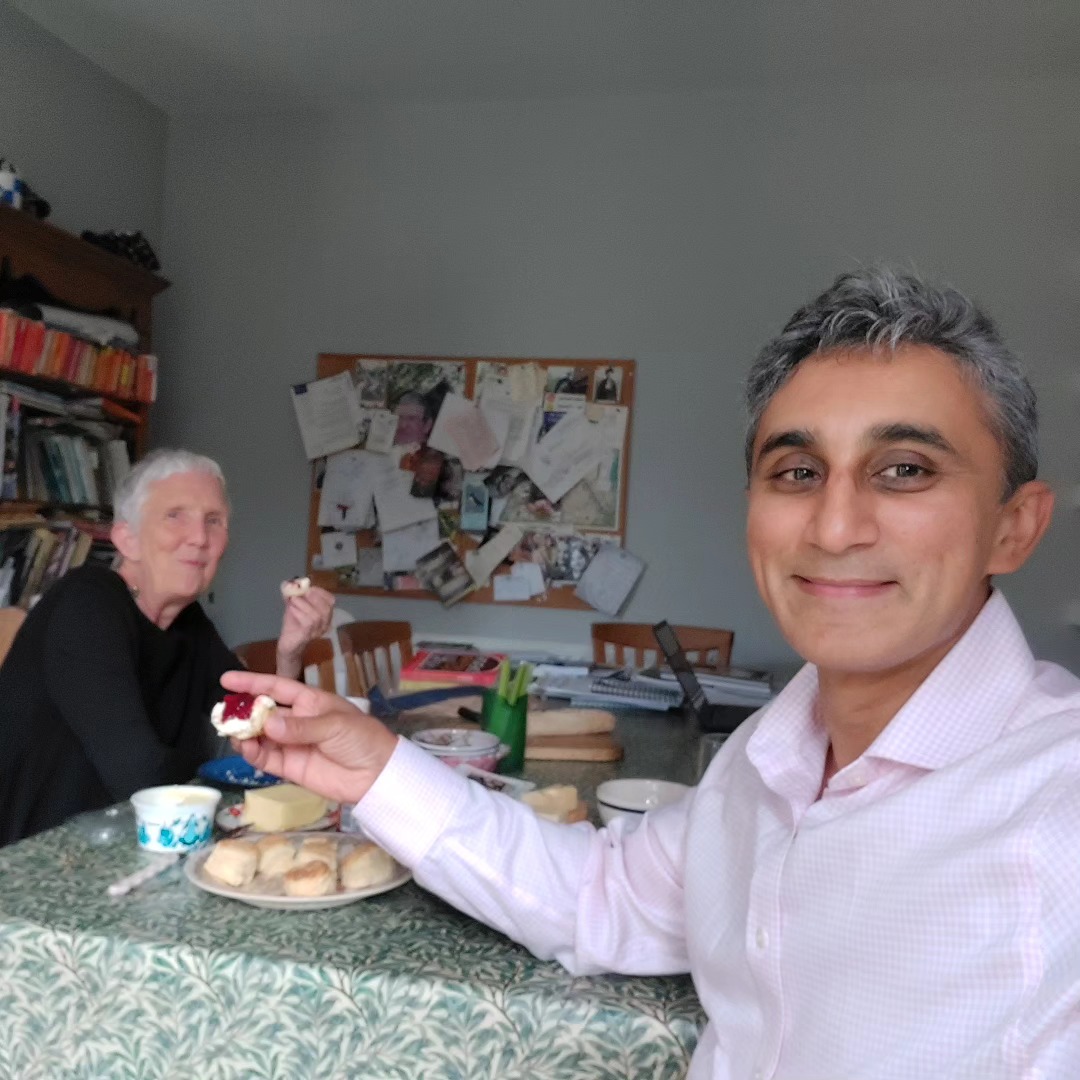
Having said this, I am fortunate to have had a schedule of events to help launch Death of a Lesser God and great reviews – in the FT, the Literary Review, Heat Magazine, LoveReading, and the Mail on Sunday among others. The highlight so far? A ‘soft’ launch in Ann Cleeves’ home town of Whitley Bay. Ann baked me scones and we chatted about murder at her kitchen table – where she has written many of her Vera, and Shetland novels. Ann has been a great supporter of the books!
In each of these books I try and reveal some of the hidden history of the subcontinent.
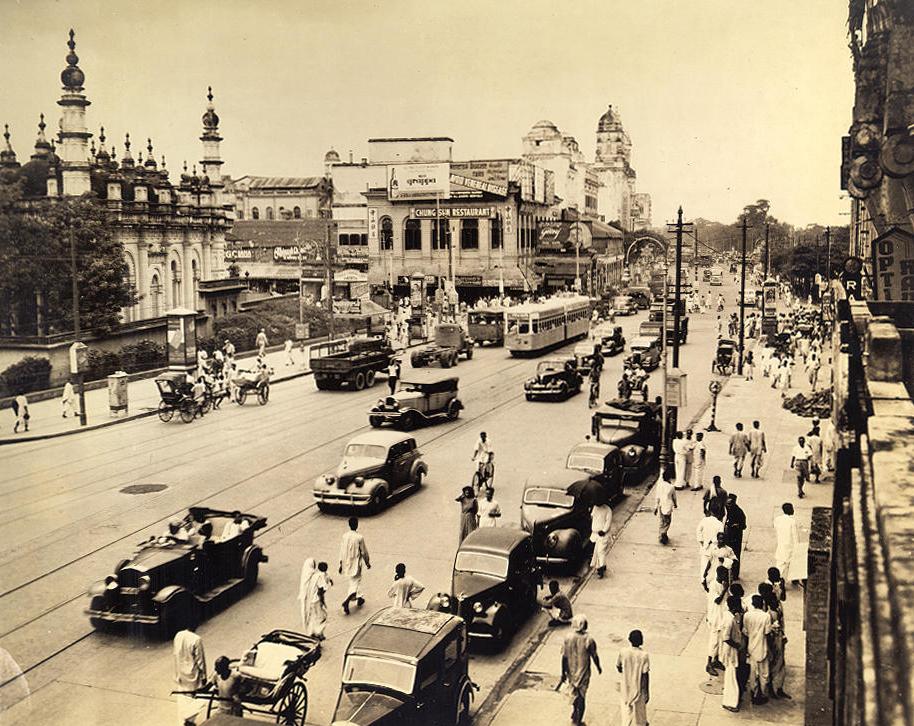
The second half of Death of a Lesser God is set in 1950s Calcutta. In the book I describe the city thus: “Once a pestilential riverine swamp, infested by bamboo jungles where tigers roamed freely, snacking on unsuspecting locals, the city was, in part, an invention of the British, who’d purchased the rights to the local land and the villages that sat upon it. One of those villages had been Kalikata, from which it was said Calcutta took its name.”
Calcutta became a base for British operations in India, with the colossal Writers Building housing the monolithic bureaucracy needed to govern the subcontinent – ‘writers’ being the name for the army of East India Company clerks who populated the building, dressed in woollen suits in the searing tropical heat, mildewing in the annual monsoon, and dying, variously of dysentery, malaria, and drunkenness. Over time, the city became mired in the independence movement, until, in 1911, fed up with the argumentative Bengalis, the British upped sticks and moved their base of operations to Delhi.
Chowringhee Square, Calcutta in 1945. Image credit: Public Domain
The Malabar House novels, beginning with Midnight at Malabar House, were born of my desire to explore India just after Independence, a nation still reeling in the wake of Gandhi’s assassination and the horrors of Partition when a million Indians died in communal riots. My lead character, Persis, is determined to prove herself in a man’s world, but is banished to Bombay’s smallest police station, Malabar House, populated by rejects and misfits. (The Times said: “Think Mick Herron in Bombay.”) The books contain many characters that reflect the viewpoint of Englishmen born or inhabiting India with the intrinsic belief that they were gods in all but name – ‘lesser gods’, if you will – hence the title.
This article is one of a series of 50. Together they explore the history and culture of India from her most ancient civilisations to the nation’s ambitious space programme. All 50 articles will be collected into a digital book and published in due course. To receive a FREE copy of the book, simply register for my newsletter here.
In many ways India is a nebulous construct.
Some think of her as a collection of countries, rather than a unified whole, held together by the fraying threads of history, the entire mass transfigured, time and again, by war, conquest, fate, and politics. The populace of this vast nation mirrors the heterogeneity of the landscape. From the fiery Punjabis in the north to the sanguine Tamilians in the south, from the Maharashtrians on the western coast, to the Assamese in the jungles of the east, Indians represent a kaleidoscope of humanity every bit as vibrant and colourful as the array of silks and spices so often associated with the country.
The challenges that India faces in the coming years are myriad.
In spite of a recent slowdown, India remains one of the fastest growing economies in the world. By 2027, India will have overtaken Germany and Japan to become the world’s third largest economy – behind only the US and China.
This rampant economic growth comes at a price.
The nation’s cities are creaking beneath the sheer weight of ever-increasing populations. As fast as the government clears slums or attempts to resettle them, new slums spring up. The exodus from village to metro continues unabated.
India’s pollution problem has reached epidemic proportions. The country is one of the world’s largest emitters of carbon dioxide. In response, the country’s political masters have announced an ambition for India to become a net zero emitter by 2070. A laudable goal, but one that relies on both political will across successive governments and an understanding that those at the lowest rungs of society still live a hand-to-mouth existence. For them, the urgency is in finding the next meal, not saving the planet from the consequences of – as many in the developing world see it – past climate evils committed by the west.
With a relatively young population, the need to create new jobs is a constant spectre for those in charge. At the same time, India’s middle class are living longer. It is only a matter of time before the country begins to feel some of the pain that western economies are experience in attempting to fund the consequences of longer life expectancies.
Modernity has made inroads into every aspect of the country. At times this has led to some suggesting that India is forgetting her roots, or, at the least, that those roots are weakening.
And yet, there remains something stubbornly Indian about India.
In the mind’s eye, many still picture her as a land of swamis and snake-charmers, of old-fashioned trains swaying across golden wheat fields and monsoon-drenched lowlands, of crumbling palaces and the nostalgic legacy of the Raj.
All these things are part and parcel of the country’s DNA.
Yet there is also a new, vibrant, and, at times, futuristic India. An India where village women are employed to enter raw data into programmes that train artificial intelligence algorithms. An India where city skylines are increasingly beginning to rival the skylines of New York, Singapore, London. An India where urban youth congregate in coffee shops, watch Netflix, and aspire to non-traditional careers.
This is a country on the verge of a cultural explosion, an entire generation released from the shackles of its own mythology. Yet this is also a nation that continues to celebrate its history, enshrining that vast provenance into the way Indian society thinks and behaves. Sometimes, that is a good thing; at other times it leads to an uncomfortable clash between past and present.
During the course of this collection of short essays we have skated across the vastness that is the subcontinent. The truth is that another one thousand essays might have been included here and would still fail to adequately catalogue the immensity of India’s story.
Back in 2004, India promoted herself with a new slogan: ‘India Shining’, capturing her emergence onto the global stage. Will India continue to shine, despite the many issues that plague the country?
What is fact is that the Indian locomotive thunders on. Where will India be in another fifty or one hundred years? Only time will tell. But I’m betting that then, as now, her voice will be heard loud and clear across the world.
This article is one of a series of 50 published on my website. Together these pieces explore the history and culture of India from her most ancient civilisations to the nation’s ambitious space programme. You can read all 50 pieces here.
All 50 articles will be collected into a digital book and published in due course. To receive a FREE copy of the book, simply register for my newsletter here. The newsletter goes out every three months and contains updates on book releases, articles, competitions, giveaways, and lots of other interesting stuff.
If you had told me ten years ago that I would become the first non-white Chair of the UK Crime Writers’ Association in its 70-year history, I would have laughed (maniacally, as befitting a crime fiction villain). That I have now taken the hot seat feels a bit like being tasered, without my fizzing limbs involuntarily doing the robot dance.
As I write these words I’m somewhere over the Atlantic, halfway to Canada, to speak at the Motive festival in Toronto. Next week I’m speaking in Somerset, and then I’m at the British Library chairing an eclectic panel discussing Agatha Christie’s influence around the world, featuring, among others, a famous Bollywood film director known for his Hindi-language Shakespearean adaptations. In between, I’ll probably play a game of cricket, get out for another low score, make the walk of shame back to the changing room, and hurl my bat at an unsuspecting bin. All while resolutely ignoring the writing deadline hanging over my head like a giant guillotine.
Photograph: Charlotte Graham/Shutterstock
This piece isn’t about how honoured I am to follow in the illustrious footsteps of former Chairs such as Ian Rankin and Peter James (of course, I am) or my vision for the CWA (I’ve set that out elsewhere). Rather, these are my thoughts on what the CWA is for and what you might do with it if you decide that you want to be a part of it.
The CWA has been around a long time. It is the UK’s largest association of crime writers and was originally set up with a specific purpose – to further the interests of crime writing and crime writers. Many writers have happily called the CWA home for decades. Others have felt that, in recent years, it hasn’t lived up to its original mandate.
I am a realist by nature. I prefer to present the unvarnished truth because that allows us to deal with things, rather than stick our fingers in our ears, close our eyes, and sing la la la in a very loud voice. In a former life, I was a management consultant where I’d often have to smack people around the face with the proverbial wet fish to get them to wake up and see what was under their noses. Old habits die hard.
Here’s what I think the CWA is and – perhaps, more importantly – is not.
The CWA is not a yellow brick road to literary success – yet it is true to say that it is home to writers straddling the spectrum of success, both those who probably don’t need the CWA anymore and those for whom the CWA can provide inspiration as they begin their writing journey. The CWA is not a panacea for the many ills plaguing the publishing industry – yet it is true to say that the CWA aims constantly to further the interests of writers, even if it doesn’t always have the clout or financial muscle to force through change. The CWA is not an all singing all dancing members club – yet is true to say that, in our own small way, we seek to connect our members, if not always physically, then through a shared vision of what we’re all trying to achieve, namely, success – both individually and collectively – for our crime writing.
The CWA has never had more members than it does now. Many have been stalwarts for a very long time – please know that your commitment is valued. It’s also wonderful to see so many new faces joining and equally heartening to see many others returning to the fold. I’m not going to pretend that those returning writers – many of them household names in crime fiction – didn’t leave without good reason. The fact that they are back is a fillip to both the CWA as an organisation, but also, I hope, to the wider membership. Inspiration comes in many guises. Sometimes, it comes from simply knowing that you’re a part of an organisation that houses the great and the good in your industry, those who have made their mark and now want to offer encouragement to those who follow, even if only by their presence.
I’ve said this elsewhere, but I’ll say it again. When I came into this industry, almost a decade ago, I didn’t know anyone. I was told by my agent to join the CWA and I found some friends here, and suddenly I felt less alone in an industry that can be truly frightening and confusing, especially for newbies. If I’ve had any writing success today it’s because I’ve had the support of friends and well-wishers. That’s what I want I the CWA to be.
The CWA has its shortcomings, of course it does. Sometimes, it makes mistakes. Maybe you won’t always get a welcome pack on time or an email you were expecting. Remember that we are a board of volunteers, together with a handful of part-time paid staff, trying to juggle fifty plates in the air apiece. If we had greater resources I’d promise you the earth and the moon – and chuck in Mars for good measure. But we don’t. All I can do is ask humbly for your patience and understanding and to not hunt me down and beat me like a piñata when things go wrong.
Having said this, I believe there are many things the CWA gets right.
Through the Daggers, the CWA recognises excellence and can help to elevate writers to greater success. Through the events that we run, we connect writers and allow friendships to bloom. I know, from personal experience, that those friendships are sometimes the only thing that sustains you when you’re in the trenches and feel like the industry is shelling you with mortar bombs. Such are the vicissitudes of the writing life.
The CWA’s new look board is more diverse than it has ever been. With new co-vice-chairs William Shaw and Sarah Ward, and new board members, Nadine Matheson, Stella Oni and Morgen Witzel – adding to a great existing team – my hope is that we now represent a very wide range of communities and backgrounds, reflecting the broad church that crime writing itself represents. That has to be to the good of us all, doesn’t it?
The desire to belong to something greater than ourselves is hardwired into us. In spite of the occasional misanthropic tendency – who among us hasn’t wanted to axe murder one of our nearest and dearest from time to time? – most members of the human race are gregarious by nature. We are at our best when engaged in collective endeavour – building pyramids, designing washing machines that aren’t magic portals aimed at turning a pair of socks into a single sock, etc. Being a part of the CWA is to be involved in such an endeavour, something greater than the sum of its parts. If I might be permitted to go all JFK on you for a moment, sometimes it’s about asking what you can do for the CWA (to help further crime writing’s interests as a whole, I mean), rather than what the CWA can do for you. That’s not to abrogate the CWA’s responsibilities to our members, but merely to encourage us all to think about how much we could achieve simply by being a mass of writers unified by a common vision – to take crime writing to ever greater heights.
Here’s what I’d like to see. If you’ve previously felt the CWA wasn’t for you, now might be the time to think again. If you’re a publisher/editor/agent etc involved in crime fiction, think of joining as corporate/associate members. We can always use the support and the money. And if you don’t think it’s for you, that’s also cool. We wish you well anyway. Crime writing is more than the CWA; and that’s exactly how it should be.
What you do with your membership depends on what you expect from it. Muck in if you want to. Or enjoy lurking quietly in the wings, silently cheering on the cause. Whatever suits your temperament. I make no demands other than one: treat each other with respect. No amount of success – or lack of it – entitles any of us to look down on or upset anyone else.
On this flight I’m watching the recent Oscar-winning film Everything Everywhere All At Once. The film is about parallel dimensions and how “every tiny decision creates another branching universe”. So, in another universe, I did not become the CWA Chair. In another universe, I remained unpublished, but kept on writing, purely for myself, until I popped my clogs and ended up in the great writers’ association in the sky. And if that’s your story, that’s OK too. Because none of us started writing in the belief that we would find fame and riches. We write because it speaks to a meaningful part of ourselves. We write because it is our secret joy, our tempestuous passion, the one thing no one can take from us, regardless of how great or humble our achievements.
To quote from Everything Everywhere All At Once: “Even in a stupid, stupid universe there is always something to love.” I love reading. I love crime fiction. I love literature. If you share those passions – no matter how stupid you think the writing universe can sometimes be – then perhaps the CWA is for you.








 Vaseem Khan
